Group Overview
The main research activities focus on the geochemistry of petroleum source rocks. Our work encompasses the comparative diagenesis of clay minerals and organic matter, as well as lead-zinc mineralization processes. Applications of molecular geochemistry enable the development of models for the establishment of anoxic conditions in sedimentary basins, the investigation of organic matter diagenesis in relation to the preservation/productivity balance, and the identification of specific biomarkers indicative of redox conditions and primary organic productivity.
Molecular correlations between crude oils and source rocks provide the foundation for the identification and characterization of petroleum systems.
Our research integrates organic geochemistry with mineral geochemistry (major and trace elements) and the isotopic geochemistry of both organic and inorganic carbon. Advances in the characterization of source-rock organic matter—including its origin, thermal maturity, and geographic distribution—contribute significantly to global models of anoxic-event development in sedimentary basins across the Atlantic region, Europe, and the Americas.
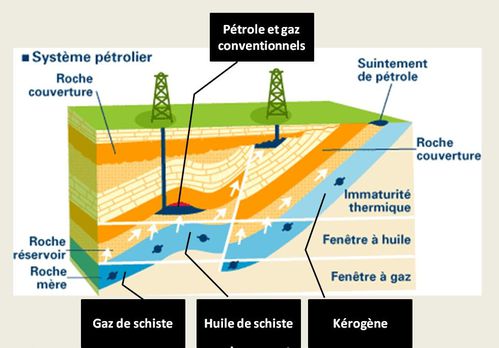
The study of organic matter is of considerable economic importance because of its role as the source material for both conventional energy resources (oil and natural gas) and unconventional resources (shale gas and oil shale), while also providing valuable scientific and academic insights into Earth system processes.