Group Overview
The main research activities focus on the development and characterization of metallic materials with controlled microstructures and enhanced mechanical properties. Metallurgy, beyond its traditional definition as the science of producing metallic alloys, encompasses a significant part of materials science related to metals, alloys, and metal-matrix composites.
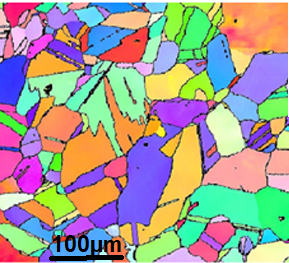
In addition to chemical composition, the properties of metals and alloys are closely linked to their microstructure (present phases, morphology, and texture), which is strongly influenced by the thermomechanical treatments applied during processing. Therefore, the control and optimization of these treatments are essential for producing materials with the desired mechanical and physical properties.
Research on metals and alloys also contributes significantly to solving industrial challenges at both regional and national levels. Corrosion-related issues are widespread across various sectors, including the chemical industry (acid storage and transport systems), metal construction (selection and performance of structural steels), and the petroleum industry (pipeline corrosion and protection).
Furthermore, challenges associated with mechanical properties are frequently encountered, including the optimization of heat-treatment conditions, welding technologies, and the behavior and reactivity of weld joints. As a result, metallurgy plays a crucial role in both local and national industrial development.