Details & Objectives
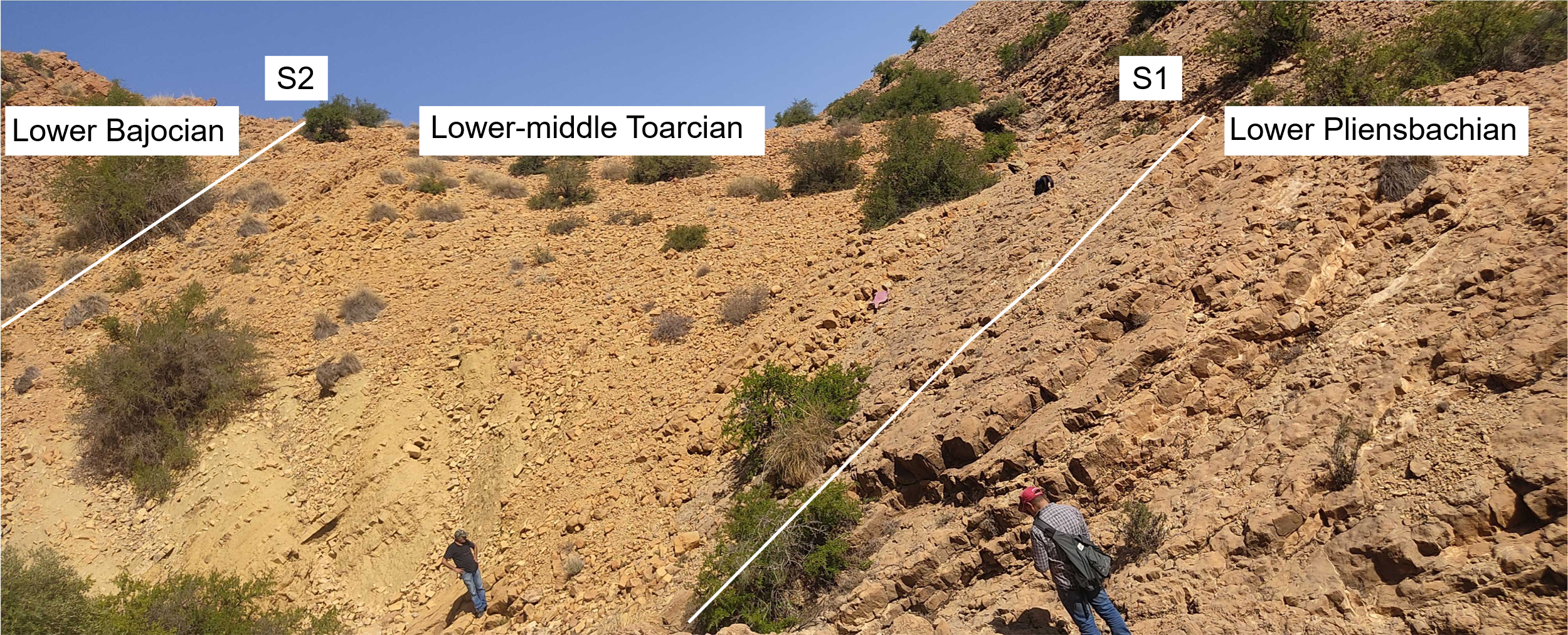
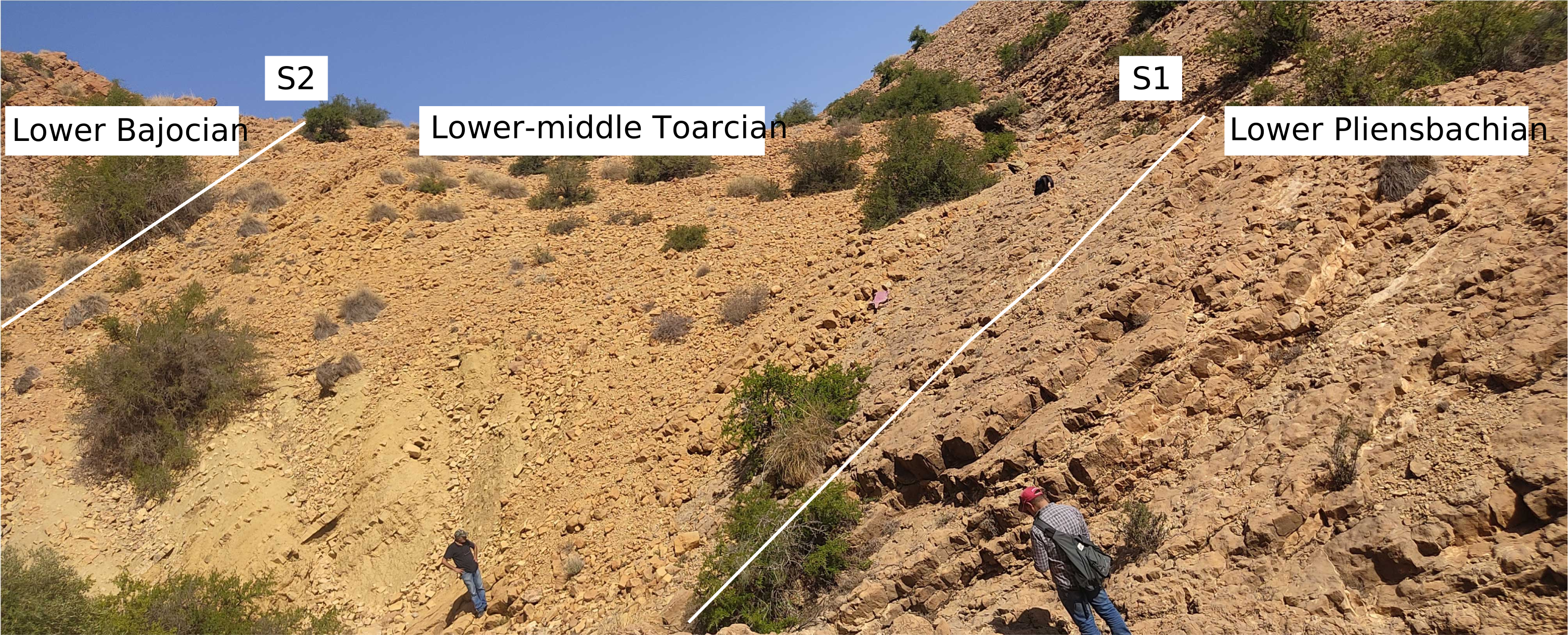
The geographic distribution of the Toarcian in Tunisia (southern Tethyan margin) is nearly homogeneous, except on the Saharan platform. During this period, only the low-lying areas were filled by outer-platform marl-limestone sedimentation, with the development of anoxic conditions mainly in the grabens, leading to the preservation of large amounts of organic matter (OM), while the horsts are covered by condensed facies and/or major discontinuities accompanied by stratigraphic gaps.
This research area aims to reconstruct the paleoenvironmental and paleoclimatic conditions of the Toarcian in Tunisia, a period marked by an oceanic anoxic event (OAE) associated with Tethyan rifting, intense volcanic activity, and global warming. These events promoted the accumulation of organic matter in marine basins and caused significant disturbances to the carbon cycle, biological extinctions, and a rise in sea level. The study relies on a multidisciplinary approach integrating sedimentology, organic and mineral geochemistry, isotopic stratigraphy, and micropaleontology. High-resolution analyses of sedimentary successions will help identify the climatic, environmental, and geochemical variations recorded during this key interval of Earth's history.